Alright, Resident Evil fans, buckle up. We’re diving headfirst into the best and worst of the series’ 30-year history. It’s been a wild ride full of fixed cameras, co-op chaos, and enough camp to fill a mansion with zombies. Let’s rank ’em all!
Honestly, ranking the Resident Evil series seemed easy until I started writing. The side games, while mostly lore-light, are where the franchise really took risks. And boy, did they sometimes land hard.
Resident Evil has survived every creative pivot imaginable: fixed cameras, co-op action, first-person reinvention, and endless remakes. It’s still culturally dominant. The best entries understand tension and pacing, while the spin-offs gave us some of the funniest, cringiest moments that weirdly endear them.
I left out mobile games and multiplayer-only titles like Operation Raccoon City, Umbrella Corps, and Resistance. They don’t add much to the lore and are forgettable at best. If you want a bad time, their servers are still online.
I also grouped experimental games like Outbreak, Revelations, and Gun Survivor with their sequels since they’re essentially the same experiment. Outbreak 2 always felt like DLC before DLC existed.
Here’s my personal Resident Evil ranking for the franchise’s 30th anniversary.
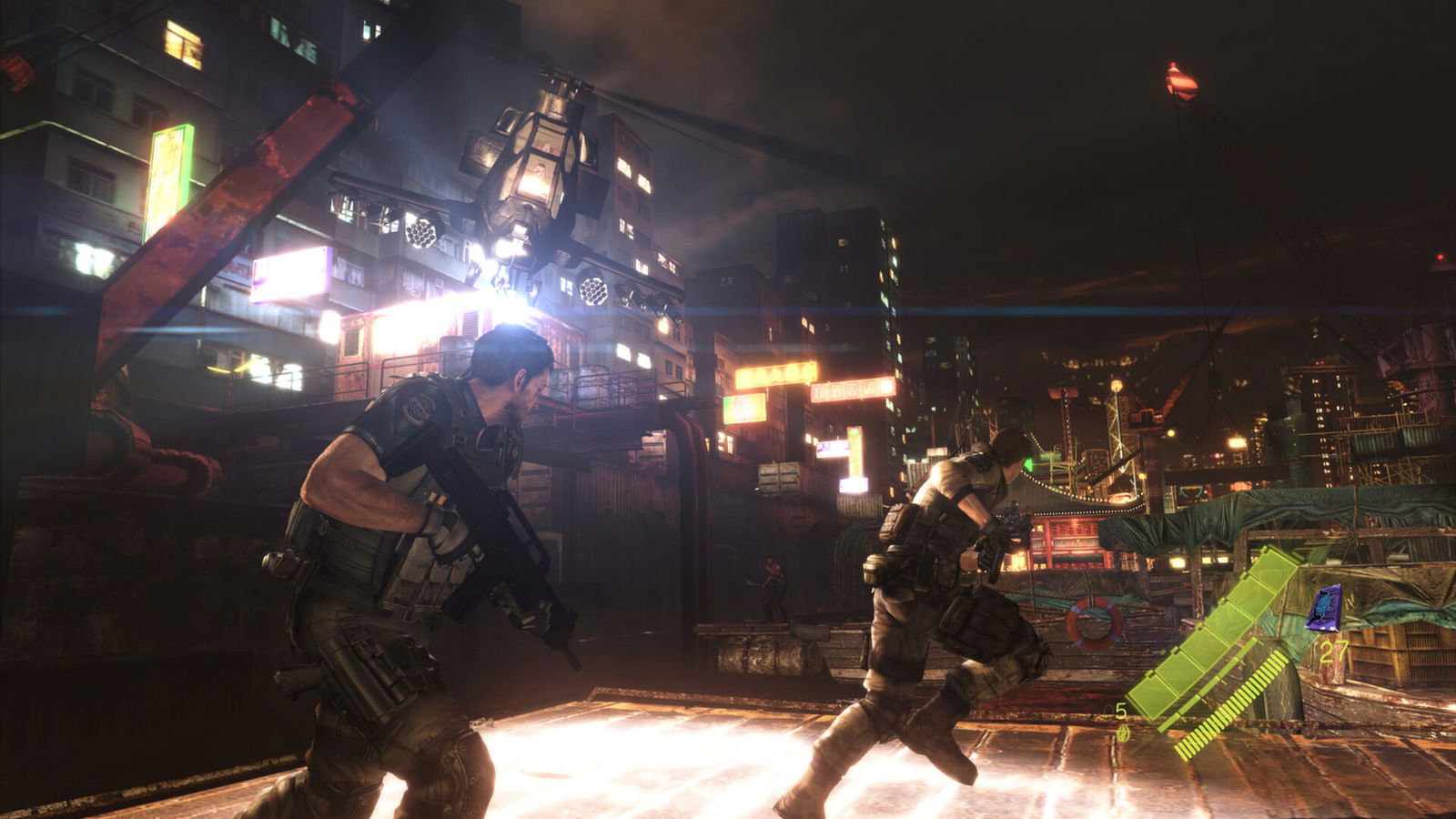
22. Resident Evil 6
Resident Evil 6 is the franchise at its most bloated. Four interwoven campaigns try to please everyone: horror, action, espionage, melodrama. The result is a mess.
Horror is gone. Set pieces overwhelm atmosphere. Enemy waves blur together. Character campaigns drag on way too long. How do you mess up Chris and Leon finally meeting? RE6 is why Resident Evil lost so much reputation.
21. Resident Evil Survivor (1 & 2)
The Gun Survivor spin-offs turned Resident Evil into a first-person, light-gun-style shooter. In theory, this could have been immersive. In practice, it was a disaster.
Weak stories, amnesia tropes, thin characterization, and awkward voice acting undermine any tension. There’s nothing to take away from these games.
20. Resident Evil Gaiden
Gaiden is one of the strangest entries. It combines top-down exploration with first-person, timing-based combat. They really asked, “What if we made Resident Evil mobile in 2001?” and went all in.
The combat system is unique but disconnected from survival mechanics. It’s an interesting experiment that doesn’t work.
19. Resident Evil: Deadly Silence
Deadly Silence tried to adapt the original Resident Evil for the Nintendo DS with touch-screen gameplay. It’s technically impressive for a handheld Resident Evil, preserving much of the mansion’s design.
But it feels gimmicky. It’s a curious port, not the definitive way to play the original.
18. Resident Evil 0
Resident Evil 0 is a prequel that digs into the fall of S.T.A.R.S. Bravo Team and gives us more Rebecca Chambers. The tone is there, and the train opening is memorable.
Where it falls apart is the partner-swapping mechanic between Rebecca and Billy. It should have been cool but turned into frustrating inventory juggling that kills pacing.
17. Resident Evil: The Umbrella Chronicles & The Darkside Chronicles
The Chronicles games feel like Capcom digging through the Resident Evil archive and remixing it into something faster. On-rails shooters were already outdated, but these carve out their own lane.
The shooting is solid, especially co-op, but it lacks the weight and tension of mainline games. These are highlight reels, not fully realized experiences.
16. Resident Evil Dead Aim
Dead Aim is a weird one even by spin-off standards. It sits between a traditional light gun shooter and a mainline Resident Evil game, letting you move around in third-person before snapping into first-person for shooting.
Set aboard a cruise ship, it taps into isolated horror settings, but the tension never lands because of disjointed gameplay. The story is campy fun, though.
15. Resident Evil 3 Remake
The remake of Resident Evil 3 is polished and cinematic. Gunplay feels satisfying, and Jill has more emotional depth.
But it feels truncated. Entire sections from the original are absent, reducing the sense of exploring a town on the verge of collapse. Nemesis’ redesign is also questionable.
14. Resident Evil 3: Nemesis (Original)
Resident Evil 3 looked at the Mr.X mechanic and turned it into a whole game. Nemesis and his sudden appearances with rocket launcher in hand inject panic into exploration.
The live-selection choice system adds some variety. It leans more into action with increased ammunition and explosive tools.
After the expansive Resident Evil 2, it feels more compact. While Nemesis is iconic, the overall structure lacks the intensity of RE2.
13. Resident Evil Revelations & Revelations 2
The Revelations titles tried to steer the series back toward horror while maintaining modern action balance. Revelations 1’s cruise ship setting is its greatest strength.
Revelations 2 leans into character dynamics with co-op play. Each group has offensive and support characters, which isn’t great for survival horror.
Its episodic structure adds cliffhangers that encourage momentum, even if pacing is uneven.
12. Resident Evil 5
Resident Evil 5 fully embraces blockbuster action. Designed from the ground up for co-op, it prioritizes spectacle over isolation.
Played with a friend, it can be genuinely fun coordinating inventory and covering each other. But playing with AI-controlled Sheva is isolating in a way that doesn’t convey horror.
Visually stunning at release, but horror becomes secondary. This began the franchise’s decline as the ultimate horror series.
11. Resident Evil Outbreak (File #1 & #2)
Outbreak was ahead of its time in a way that feels tragic. Cooperative survival horror in 2003 with no voice chat and only simple commands.
The infection timer was brilliant, adding constant tension. Each scenario felt like a slice of Raccoon City’s collapse from a civilian perspective.
Technical limitations held it back. AI companions were inconsistent, load times were painful, and online matchmaking was cumbersome.
10. Resident Evil Code: Veronica
Code: Veronica feels like the true continuation of Resident Evil 2’s narrative. It pushes the Redfield storyline forward in an over-the-top way that became synonymous with the series.
The gothic island setting and Antarctic facility give it weird theatrical flair. The atmosphere is thick with melodrama, over-elaborate villains, and stylized environments.
It embraces its camp but pairs it with genuine tension. Some puzzles and resource management scenarios are brutally demanding.
9. Resident Evil 4 (Original)
Okay, hear me out. This is going to get hate. Growing up with Resident Evil 1-3, Resident Evil 4 didn’t feel like Resident Evil to me. Its focus on cheesy one-liners and action-heavy sequences made me miss the zombie-filled corridor times.
But Resident Evil 4 came out like an explosion and changed gaming forever. The third-person over-the-shoulder camera was a dramatic shift. It gave players the ability to fully explore environments visually.
Time has exposed its excessive QTE-heavy sections, some late-game encounters lean heavily into pure action chaos, and the campy tone undercuts the horror. But the tradeoff changed gaming history.
8. Resident Evil Village
Resident Evil Village is wildly creative, shifting between gothic horror, psychological experimentation, and action spectacle. It feels like a better version of Resident Evil 6 in all the best ways.
Lady Dimitrescu’s castle is a standout, but each region experiments with genre conventions. It’s bold, sometimes uneven, but rarely boring.
Village trades the intimacy of RE7 for variety. It feels like Capcom testing how far the series can stretch without snapping.
7. Resident Evil (1996)
What can be said about Resident Evil that hasn’t already been said? It’s foundational.
The Spencer Mansion is a masterclass in environmental puzzle design. The looping corridors, locked doors, and traditional crank puzzles force players to memorize the layout.
Voice acting is famously campy, but the structure is tight. Ink ribbons made saving meaningful. Every zombie encounter felt costly.
6. Resident Evil Remake
Resident Evil Remake is a great blueprint for how to remake a classic without changing what made it special. Capcom doubled down on the original’s identity and refined it with incredible care.
The visual overhaul was staggering at the time and still looks incredible today. The addition of Crimson Heads turns every zombie into a potential long-term problem.
Lisa Trevor’s inclusion adds human tragedy and horror that grounds the mansion in something unsettlingly human. Even small changes like defensive items subtly shift how you approach encounters.
It’s deliberate in a way the series rarely allows itself to be anymore. It understands exactly what Resident Evil is at its core and leans into it fully.
5. Resident Evil Requiem
Resident Evil Requiem feels like the culmination of every game before it. It synthesizes the best of both worlds into this incredibly fluid, hard-hitting, horrific experience.
Exploration rewards curiosity. Hunting down raccoons and opening containers as Leon feels good. The atmosphere is thick with unease.
It feels like the first game that makes our long-loved heroes finally look at everything that’s happened to them in a meaningful way.
4. Resident Evil 4 Remake
Resident Evil 4 had an impossible task: reinterpret one of the most influential games ever made. Instead of replicating it beat for beat, Capcom deepened it.
Combat feels heavier. Leon feels more human and vulnerable. The village sequence regains its terror by making the opening more grounded.
The castle benefits from stronger pacing, and even smaller story moments land with more weight. It refines its ideas with modern design sensibilities.
3. Resident Evil 2 (Original)
Resident Evil 2 expanded Resident Evil beyond a single mansion. It immediately felt larger, more desperate, and more alive than the Spencer Mansion ever did.
The A/B scenario system, where you play as one character first followed by the next, gives players a sense of playing through the complete story.
Whoever you chose to have route B would have to fight against Mr.X to keep things fresh and even more dreadful. The better fixed camera angles amplified dread even more.
While modern controls have aged past tank controls, Resident Evil is one of the few old-school horror games where the controls, while slightly frustrating, are a good implementation of the control scheme.
2. Resident Evil 7: Biohazard
Resident Evil 7 did the impossible. It rescued Resident Evil from the depths of mediocre hell. After the maximalist chaos of Resident Evil 6, the shift to first-person claustrophobia felt like the radical shift the series needed.
The Baker estate is one of the most cohesive settings in series history. It’s intimate, grotesque, and grounded in a way previous entries rarely were.
Jack Baker stalking you through narrow hallways is as tense as anything the franchise has delivered. The latter half leans into action more than some would prefer, but the tonal reset cannot be overstated.
RE7 restored vulnerability to the player and re-centered horror as the driving force behind the series.
1. Resident Evil 2 Remake
Resident Evil 2 Remake remains one of the most impressive remakes ever made. It modernizes a genre-defining classic without sanding away its edges.
The way they made the RPD into this almost living puzzle box and somehow amplified the already great puzzles that were in the original was astounding.
Mr. X’s dynamic presence transforms backtracking into dread, backed by the fearful hulking steps that the sound team just nailed home.
This is the blueprint for what we see modern Resident Evil being. It showed longtime fans that there was a passion and fire behind the team creating Resident Evil in a way we hadn’t seen in a long time.

Pixel P. Snarkbyte, widely regarded as the “Shakespeare of Sh*tposts,” is a video game expert with a unique knack for turning pixels into punchlines.
Born in the small town of Respawn, Pennsylvania, Pixel grew up mashing buttons on an ancient NES controller, firmly believing that “blowing into the cartridge” was a sacred ritual passed down through generations.
Pixel P. Snarkbyte: proving that life, much like a buggy open-world game, is better with a little lag-induced chaos.
⚖️ ENTER THE LEGALIZER
Think the government has no idea what it's doing? Put your case before the Federal Case Terminal and find out.