
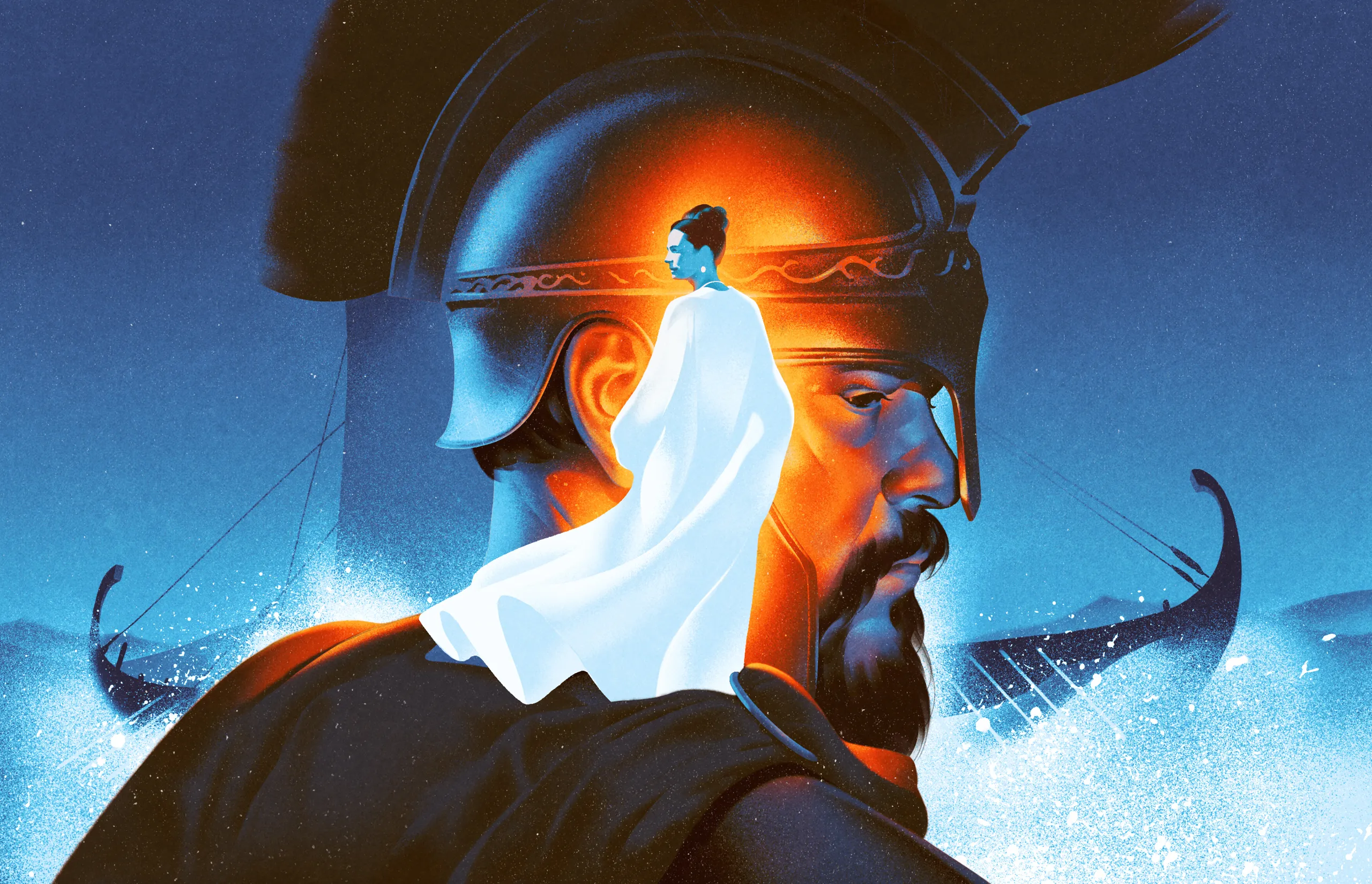
It’s a feat worthy of the gods themselves: taking a 3,000-year-old tale that every single person reads in high school English and somehow making it surprising. And yet, Christopher Nolan has done just that with his epic adventure film, The Odyssey. At the end of this cinematic behemoth, Matt Damon’s Odysseus comes to a realization that will leave you speechless – the mythical “People From the Sea” whispered about by the frightened people of Ithaca are, in fact, him and his men. Because, you know, subtlety is overrated. And if that’s not enough, Nolan also reveals that Odysseus’ years of wandering the oceans were at least partly his choice out of guilt for thinking of using the Trojan horse to invade Troy, thereby violating Zeus’ law, and perhaps precipitating the end of civilization. Yeah, because that’s exactly what I took away from my high school English class: the importance of not using giant wooden horses to invade cities.
The Ending: A Masterclass in Complexity (Or Not)
But, of course, there’s more to The Odyssey than just a clever twist ending. As is to be expected from a Christopher Nolan film, there’s a whole lot of depth and complexity to unpack. In fact, our team of experts (okay, maybe just one intern) spent hours breaking down the movie’s final scenes, trying to decipher the hidden meanings and symbolism. And by “hours,” I mean they watched the video we’re about to link to and called it a day. If you want to spend your precious time watching a video about the ending of The Odyssey and what it means, be our guest. We’ll wait.
The real question is, what does it all mean? Is it a commentary on the human condition? A scathing critique of modern society? Or just a bunch of nonsense strung together to sound profound? Honestly, we’re not entirely sure, but we’re sure someone will write a 10,000-word essay about it on the internet soon. In the meantime, you can check out our video below, which promises to reveal all the secrets of The Odyssey, or at least make some educated guesses.
Nolan’s Obsession with Complexity (And Our Obsession with Nolan)
It’s no secret that Christopher Nolan loves to make complex, thought-provoking films. And we love to watch them, mainly because it gives us something to talk about at cocktail parties. But seriously, the man has a knack for weaving intricate storylines and themes that keep us guessing. And The Odyssey is no exception. With its non-linear narrative and symbolism-laden plot twists, it’s a film that demands multiple viewings and lengthy discussions. Or, you know, you could just read the Wikipedia summary and call it a day.
If you’re still reeling from the experience of watching The Odyssey (and let’s be real, you probably are), be sure to check out our other videos, including one on the ending of Christopher Nolan’s Oppenheimer, one on how Nolan’s Dark Knight trilogy saved superhero movies (or not), and one on a whole bunch of Christopher Nolan trivia you might not know. Because, let’s face it, there’s no such thing as too much Nolan.
And so, another beloved franchise has been carefully extracted from its natural habitat and plopped onto the big screen, where it will either thrive or die a slow death at the hands of audiences who are just plain tired of it all. Either way, the Merchandising Department is already rubbing its hands in glee, and the Focus Group is earning another bonus for a job well done. Somewhere, an executive is nodding very seriously in a meeting, declaring that this is the future of cinema. Yeah, because that’s exactly what we need: more of the same old thing, repackaged and resold to us like it’s something new. The Content Mines remain fully operational, folks, and we’re just along for the ride.

Finn McFrame, celebrated satirical mastermind and self-proclaimed “Emperor of Irony,” started his illustrious career as a cinematographer, where his expertise in capturing every single frame of a squirrel stealing a baguette earned him accolades at obscure film festivals.
Born in the glamorous town of Boring, Oregon, Finn grew up with dreams of being a Hollywood director until he realized that satire, not cinema, was his true calling—or at least the one that let him sleep until noon.
Finn McFrame: changing the world, one satirical lens flare at a time.
⚖️ ENTER THE LEGALIZER
Think the government has no idea what it's doing? Put your case before the Federal Case Terminal and find out.