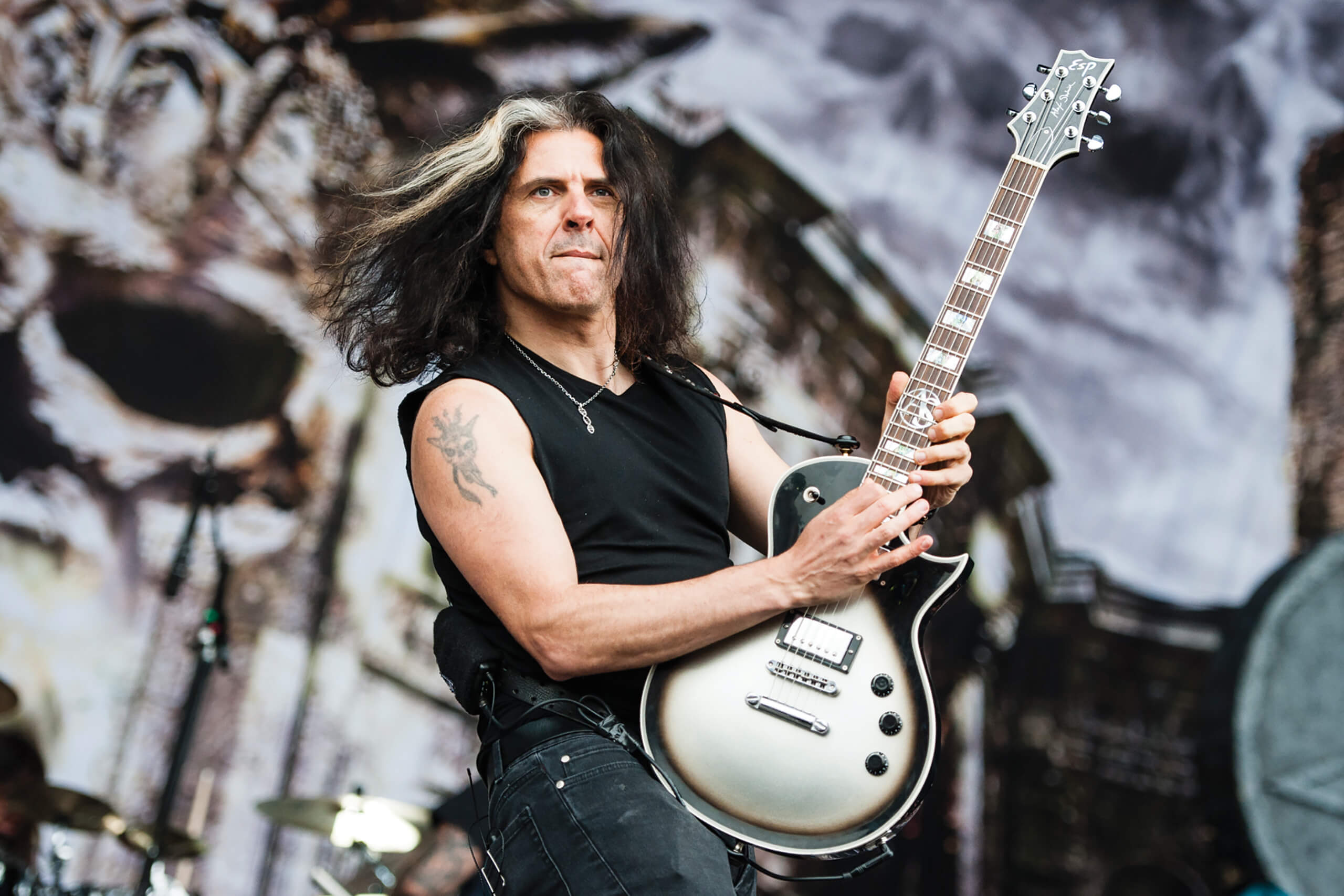
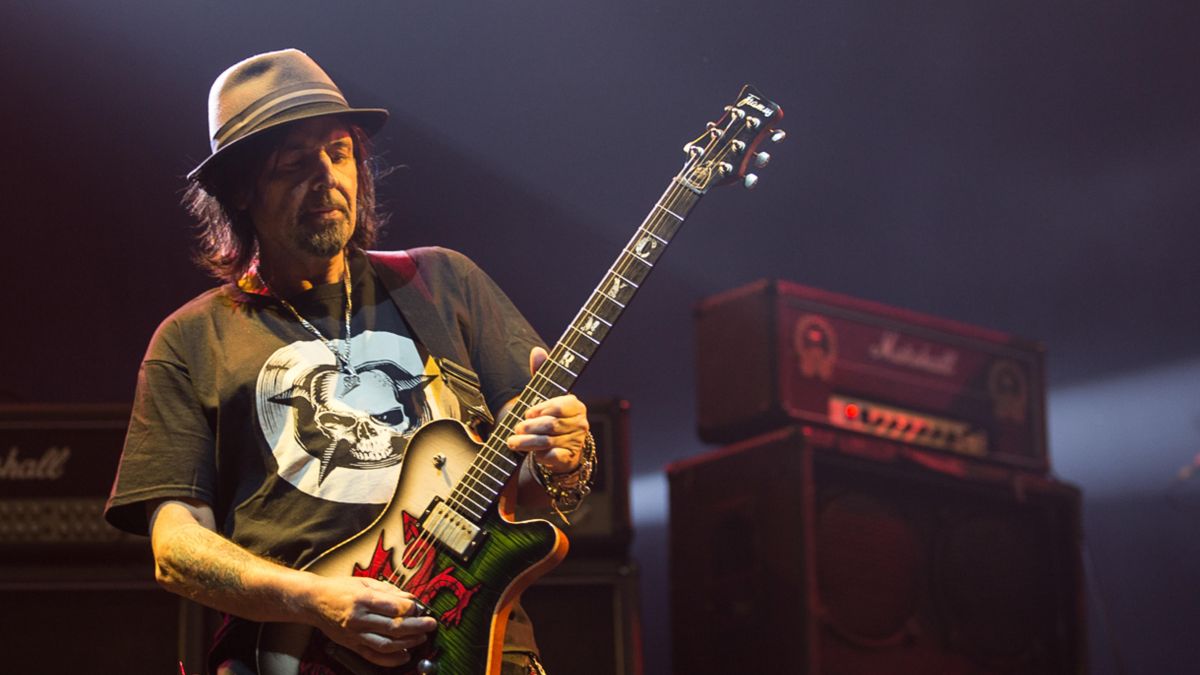
The heavy metal community is in mourning today as Phil Campbell, the legendary axeman who helped keep MOTÖRHEAD’s machine gun riffs firing for over three decades, has tragically passed away at the age of 64. In a statement that’s rocking fans to their core, his band PHIL CAMPBELL AND THE BASTARD SONS (a name that sounds like it was conceived during a particularly rowdy pub night) announced the heartbreaking news on social media, presumably after spending hours debating whether to use Comic Sans or Impact font for maximum metal credibility.
“It is with great sadness that we announce the passing of our beloved father, Philip Anthony Campbell,” the statement read, which is metal-speak for “We’re all pretty bummed about this.” Apparently, Phil “passed away peacefully last night following a long and courageous battle in intensive care after a complex major operation.” Nothing says rock ‘n’ roll quite like “complex major operation,” though it’s admittedly less glamorous than “died doing 360-degree spin kicks on stage” or “exploded from sheer awesomeness.”
Phil was apparently a “devoted husband, wonderful father, and proud and loving grandfather, known affectionately as ‘Bampi.'” Bampi. That’s right. The man who shredded riffs that could melt faces also went by the name Bampi. This is the kind of delightful contradiction that makes rock stars so endearing—they’re terrifying on stage but answer to ridiculous nicknames at home.
In what might be the most British thing ever written in a rock obituary, the statement concludes with “We kindly ask that our family’s privacy is respected during this incredibly difficult time.” Because nothing says “respecting privacy” like posting it all over social media for millions to see.
The Man Who Kept Lemmy’s Machine Running
Campbell joined MOTÖRHEAD in 1984, replacing Brian Robertson, who presumably couldn’t handle the sheer velocity of Lemmy’s vision. Phil showed up for his audition, presumably with his Flying V guitar in hand and his mullet perfectly feathered, and blew everyone away. Interestingly, MOTÖRHEAD was only looking for one guitarist, but when Lemmy discovered the “roaring synergy” between Phil and Michael “Würzel” Burston, he did what any sensible metal dictator would do—he kept them both. Why have one guitar god when you can have two? It’s like ordering a pizza and getting an extra one for free, except the pizzas can play “Ace of Spades” at 200 beats per minute.
During his 31-year tenure with MOTÖRHEAD, Phil contributed to classic albums like “Orgasmatron,” “1916,” and “Bastards.” Yes, those are real album titles, and no, they don’t exactly scream “NPR pledge drive.” These records featured the kind of riffs that made teenagers everywhere want to pick up guitars, annoy their parents, and potentially start mosh pits in their living rooms.
The band’s classic lineup with Phil, Lemmy, and Würzel was like the holy trinity of headbanging—three guitar-wielding apostles spreading the gospel of loudness. When Lemmy finally met his maker in 2015 (presumably after a poker game with the devil where he won immortality but forgot to read the fine print), MOTÖRHEAD came to an abrupt end. It was the musical equivalent of unplugging a life support machine—if that life support machine was pumping pure adrenaline and distortion.
From Welsh Wonder to Rock Royalty
Phil’s journey to rock stardom began in the most rock ‘n’ roll way possible—at age 10, he picked up a guitar for the very first time. By 13, he was semi-professionally playing in a cabaret band called CONTRAST. Yes, a 13-year-old was playing cabaret. Somewhere, a retirement home’s dance floor was being absolutely shredded.
Later, he played across South Wales in a band called ROCKTOPUS, which sounds like a rejected Pokémon name but was apparently quite serious. In 1979, he formed the heavy metal band PERSIAN RISK, proving that in the ’70s and ’80s, you could name your band pretty much anything and people would still show up to hear you play.
Here’s where the story gets delightfully metal: At just 12 years old, Phil attended a HAWKWIND concert (because obviously, a 12-year-old’s idea of a fun Saturday night is watching spaced-out hippies play cosmic rock) and managed to get Lemmy’s autograph. Cut to a few years later, and Phil’s auditioning for the very same Lemmy, presumably while the older version of Lemmy is thinking, “Wait, didn’t I sign something for this kid already?”
The Solo Career and Family Business
After MOTÖRHEAD’s demise, Phil didn’t exactly retire to a quiet life of gardening and book clubs. In October 2019, he released his first-ever solo record, “Old Lions Still Roar.” The title alone deserves a Grammy for honesty—it’s basically metal-speak for “I’m old but I can still melt your face off.” The album featured guest appearances by Rob Halford (JUDAS PRIEST), Dee Snider (TWISTED SISTER), and Alice Cooper, which is like assembling the Avengers but for people who think normal singing is for wimps.
His band PHIL CAMPBELL AND THE BASTARD SONS (yes, still the best band name in metal) released their third album, “Kings Of The Asylum,” in September 2023 through Nuclear Blast Records. It was their first and only studio release to feature singer Joel Peters, who hopefully has been practicing his “shocked and saddened” face for interviews.
In February 2025, the band canceled shows in Australia and Europe “due to medical advice Phil has just received.” At the time, no further details were available, leading to rampant speculation that ranged from “he stubbed his toe really badly” to “he’s actually a cyborg and needed repairs.” Tragically, it turned out to be something much more serious.
The Great Misconception About His Playing
In a 2025 interview with Andrew McKaysmith of the Scars And Guitars podcast (a publication that sounds like it reviews both musical instruments and actual injuries), Phil addressed what he considered the biggest misconception about his guitar playing in MOTÖRHEAD. His response was both illuminating and slightly passive-aggressive: “Well, most of the [MOTÖRHEAD] riffs [during my time with the band] are mine all the way through.”
He continued, “They’d change ’em a bit and whatever, but basically, ’cause when we were the three-piece, everyone was waiting for me to come up with something to start the songs.” So basically, Phil was the creative engine of MOTÖRHEAD’s later period, but nobody seemed to notice because they were too busy headbanging to notice who was actually writing those face-melting riffs.
His most savage burn? “I’m definitely not a heavy metal player. People think I might be a heavy metal player. I think they’re wrong there.” This is like Einstein saying, “People think I’m a physicist, but actually I’m more of a ‘smart guy who likes numbers’ kind of person.” The sheer audacity of a MOTÖRHEAD guitarist claiming he’s NOT heavy metal is so metal that it circles back around to being metal again.
The Final Riff
Phil Campbell’s passing leaves a void in the metal community that won’t easily be filled. He was the guy who kept Lemmy’s vision alive, who provided the musical foundation for some of rock’s most iconic tracks, and who managed to be both terrifyingly talented and affectionately called “Bampi” by his grandchildren.
As news of his death spreads, fans worldwide are cranking up their favorite MOTÖRHEAD tracks, raising a glass (probably something strong enough to strip paint), and perhaps most appropriately, questioning whether they’ve been mislabeling his genre all these years. Because nothing would make Phil happier than knowing that even in death, he’s still challenging people’s assumptions and shredding expectations.
Rest in power, Phil. May your afterlife be filled with endless Marshall stacks, unlimited beer supplies, and a never-ending poker game with Lemmy where you always get the best hand. The metal world has lost a true original, but thankfully, the riffs he created will continue to melt faces for generations to come. m/
Chord F. Discord, the Beethoven of Buffoonery, is a self-taught expert in music who once claimed he could “play the kazoo in four languages.”
Born in Crescendo, Indiana, Chord’s first brush with fame came when he accidentally entered a yodeling contest thinking it was a pie-eating competition—and won both categories.
Chord F. Discord: proving that laughter, much like a poorly tuned ukulele, is truly universal.
⚖️ ENTER THE LEGALIZER
Think the government has no idea what it's doing? Put your case before the Federal Case Terminal and find out.