
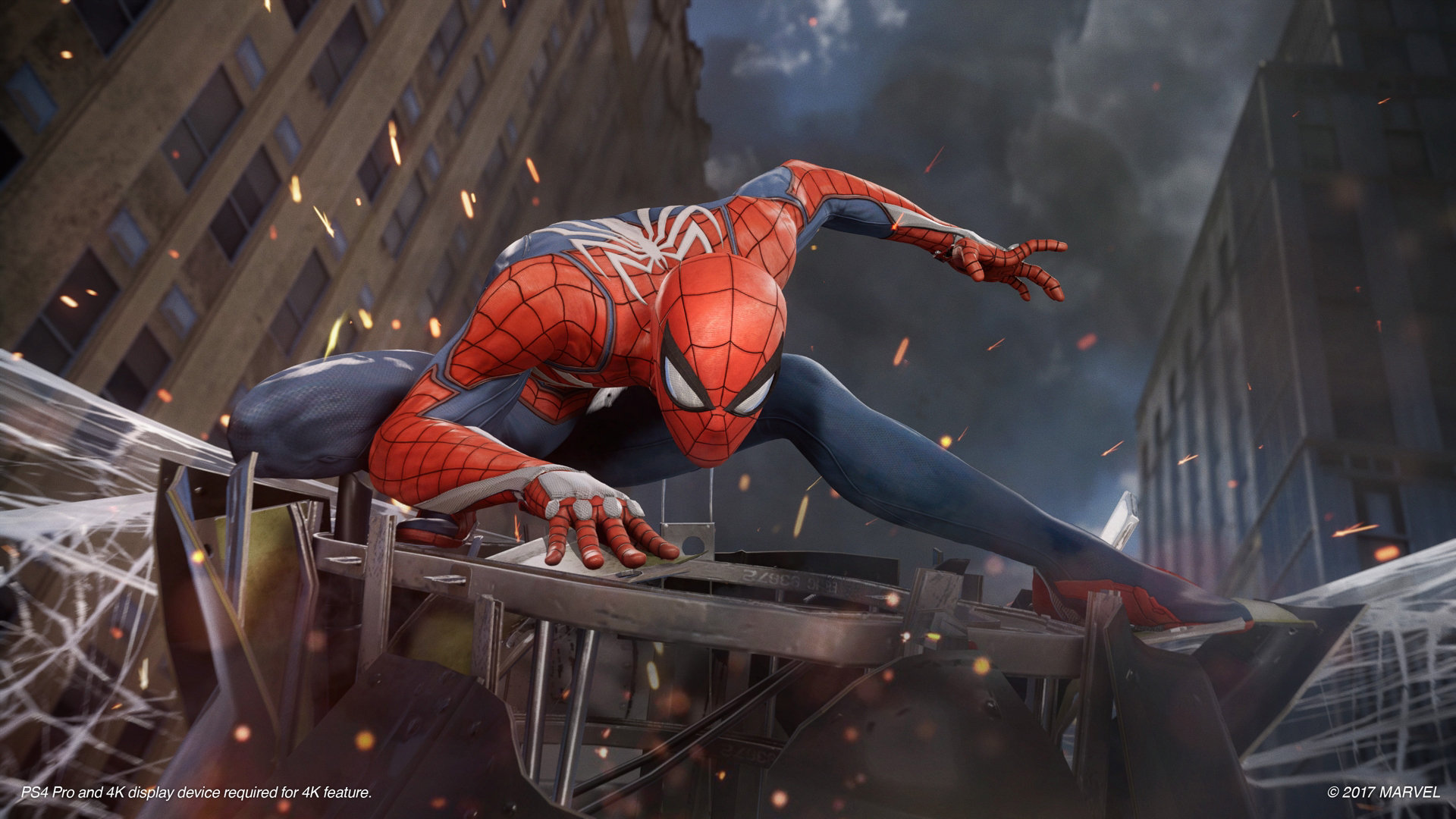
Oh joy, another chance for publishers to cash in on our nostalgia with fancy “remasters” and “reimaginings” of classic comics and games. But let’s be real, the real magic happens when developers actually put in the effort to translate the essence of a graphic novel into an interactive experience. It’s not just about slapping on a fancy filter or tweaking some lighting effects; it’s about capturing the authentic feel of a hand-drawn comic book. And that, my friends, is no easy feat.
Translating flat comic panels into interactive 3D environments relies on advanced rendering techniques and highly specialized digital sculpting. It is not just about copying colors. How do developers capture that authentic paper feel? They completely manipulate standard lighting engines. The process requires a deep understanding of traditional illustration mixed with modern rendering logic. I mean, who needs actual artistic talent when you can just hire a team of engineers to fake it, right?
The leap from page to screen demands rigorous attention to detail. Fans will instantly spot a flawed adaptation. They notice when shadows behave too realistically for a graphic novel setting. To manage this massive visual undertaking, core development teams frequently collaborate with a dedicated game art production studio to refine character models. These external teams understand exactly how to fake 2D lighting in a fully explorable 3D space. Because, of course, the key to a successful comic book game is to make it look like a comic book, not to actually, you know, play like one.
The Challenge of Moving Ink
Making static drawings move naturally is wild. Comic book artists guide the reader’s eye using clever panel layouts and dramatic, impossible perspectives. Video games must hand that camera control directly over to the player. This creates immediate tension. If a player walks into a dark alley in The Wolf Among Us, the heavy black ink shadows must dynamically adjust without losing their stylized edge. It is a tricky balancing act. Rendering engines are inherently built to simulate real-world physics and light scattering. Forcing them to ignore these rules and instead render stark, binary shadows requires custom shader development. The engine wants to create a soft gradient. Developers have to force it to render harsh, graphic lines instead. Yeah, because that’s exactly what I want in my games: more workarounds and hacks to make it look like a comic book.
Look at the vintage comic suit included in Marvel’s Spider-Man. It completely ignores the realistic environmental lighting of New York City. The suit retains its flat shading and halftone dot patterns regardless of the sun’s position. This creates a striking, nostalgic visual anchor. It totally breaks the rules of physics. And players absolutely love it. I mean, who needs realistic lighting when you can have a cool-looking costume, right? It’s all about the aesthetics, baby!
Mastering the Cel Shaded Technique
Cel shading remains the most powerful tool in the developer toolkit. It essentially flattens 3D objects, wrapping them in thick black outlines to mimic ink strokes. However, achieving a truly authentic look goes far beyond a simple post-processing filter. Industry professionals often have to literally break 3D models to make them look right in 2D. A famous example is how studios manually edit vertex normals – the invisible lines that tell a game engine how light should hit a surface. Technical breakdowns on authoritative industry hubs like Game Developer frequently highlight how editing these vertex normals allows artists to control exactly where shadows fall, ensuring characters look like hand-drawn anime or comic illustrations regardless of the camera angle. Yeah, because nothing says “fun” like manually editing vertex normals. I bet the developers just can’t wait to get started on that.
Hardware Powering the Illusion
Pulling off these visual tricks requires serious computing power. A decade ago, faking a 2D look in a 3D engine often resulted in severe performance issues or heavily restricted environments. Today, the architecture of modern consoles changes the equation. Custom solid-state drives and advanced graphical processing units handle complex post-processing filters in real-time. When a massive explosion happens on screen, the hardware can instantly render thousands of individual particle effects that look like hand-drawn comic sparks without dropping a single frame. Because, of course, the key to a successful game is to have a lot of shiny, explosive effects. Who needs actual gameplay when you can have pretty graphics, right?
Breaking the Fourth Wall with Interface Design
User interface plays a massive role in selling the fantasy. Standard health bars and generic menus simply look wrong in these stylized environments. To bridge the gap, UI designers borrow heavily from print media layout rules. Action bubbles, jagged exclamation points, and bold lettering replace standard damage numbers. When a character lands a heavy blow, seeing a massive, colourful onomatopoeia splash across the screen delivers incredible feedback. The menu screens in Persona 5 are legendary for this exact reason. While technically leaning toward anime, the punk-rock collage aesthetic and bold contrasting colours borrow heavily from Western underground comics. The menus do not just display information. They ooze attitude. Every screen transition feels like turning a glossy page, proving that interface design is just as vital to the comic aesthetic as the character models themselves. Yeah, because nothing says “immersive gameplay” like a bunch of flashy, over-the-top menus.
Blurring the Lines Between Ink and Pixels
Nailing the comic book look requires way more than a simple graphics filter. It is a comprehensive design philosophy. From manually editing vertex normals to crafting custom user interfaces, every single element must serve the print illusion. Developers will continue to push the boundaries of what is visually possible on modern interactive platforms. Collaborating with specialized external artists ensures these vibrant worlds remain authentic to their roots while leveraging the massive power of current-generation hardware. The line between graphic novels and video games is rapidly disappearing. Keep an eye on upcoming releases – the next generation of stylized digital entertainment is going to be visually spectacular. And by “visually spectacular,” I mean “filled with a bunch of fancy graphics and shallow gameplay.” But hey, who needs substance when you can have style, right?

Pixel P. Snarkbyte, widely regarded as the “Shakespeare of Sh*tposts,” is a video game expert with a unique knack for turning pixels into punchlines.
Born in the small town of Respawn, Pennsylvania, Pixel grew up mashing buttons on an ancient NES controller, firmly believing that “blowing into the cartridge” was a sacred ritual passed down through generations.
Pixel P. Snarkbyte: proving that life, much like a buggy open-world game, is better with a little lag-induced chaos.
⚖️ ENTER THE LEGALIZER
Think the government has no idea what it's doing? Put your case before the Federal Case Terminal and find out.